
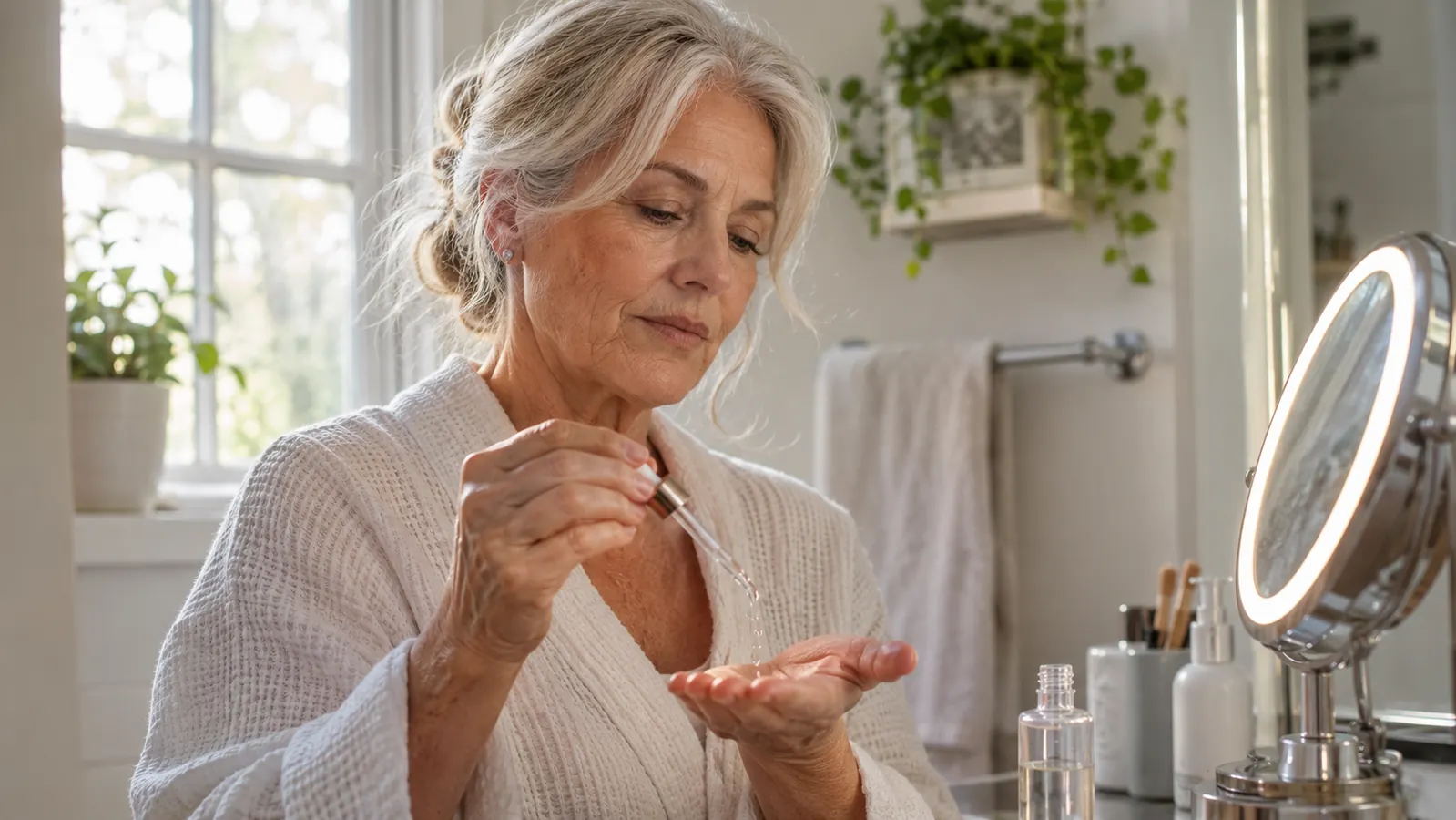
I spent years assuming the vitamin C serum in my cabinet had to be the expensive one. Twenty-six years of flying, much of it at altitude with recycled cabin air, left me with fair, combination-dry skin that flushes red across the cheeks and carries sunspots along the cheekbones. When I finally built a routine I could keep, I reached for the bottle with the impressive name first. Then, about eleven months ago, I moved my mornings over to TruSkin Vitamin C Serum, partly out of stubbornness and partly to see whether a plain glass dropper bottle could hold its own against the fancy one. It has, with trade-offs I will lay out plainly.
Here is the short answer before the details. If your skin is reactive, redness-prone or dry, and you want a brightening step that does not sting, TruSkin is the more sensible daily habit, and it is the one still in my routine after eleven months of mornings. If your skin is tolerant and you want the specific form of vitamin C with the deepest published research behind it, the pricier serum is the better formula on paper. Both soften the look of dark spots slowly. Neither is a laser. Neither is a filter, and anybody promising you otherwise has not looked closely at a sixty-one-year-old face.
| TruSkin Vitamin C Serum | SkinCeuticals C E Ferulic | |
|---|---|---|
| Cost | Costs noticeably less per bottle | Costs considerably more |
| Vitamin C form | Sodium ascorbyl phosphate (SAP), a stable and gentle form | 15% L-ascorbic acid, the most studied form |
| Research behind the exact formula | Thinner. The ingredient is studied more than this specific blend | The formula much of the vitamin C literature was built on |
| Feel on skin | Lightweight, dries down completely, a brief wet minute | Thin and watery, absorbs almost on contact |
| Reaction risk on redness-prone skin | No sting in eleven months of daily use | Can sting, particularly on reactive or broken skin |
| Scent | Unscented | Noticeable ferulic scent that fades in a minute |
| Bottle size | 1 fl oz | 1 fl oz |
| Layering under sunscreen | Dries down completely, no pilling under SPF | Absorbs fast and layers easily |
| Best for | Reactive, redness-prone or dry skin, and anyone building a habit | Tolerant skin and a preference for the most-studied molecule |
How I Compared Them
I used each one as the first step of my morning routine, on bare skin, followed by CeraVe AM Facial Moisturizer SPF 30 once it had dried. Nothing else changed. I did not add an exfoliant, I did not switch cleansers, and I have never had injections, lasers or surgery, so there was nothing else in the mix to credit. I took a photo in the same bathroom light every couple of weeks. It sounds vain and it is mostly just useful, because memory is a terrible record of your own face.
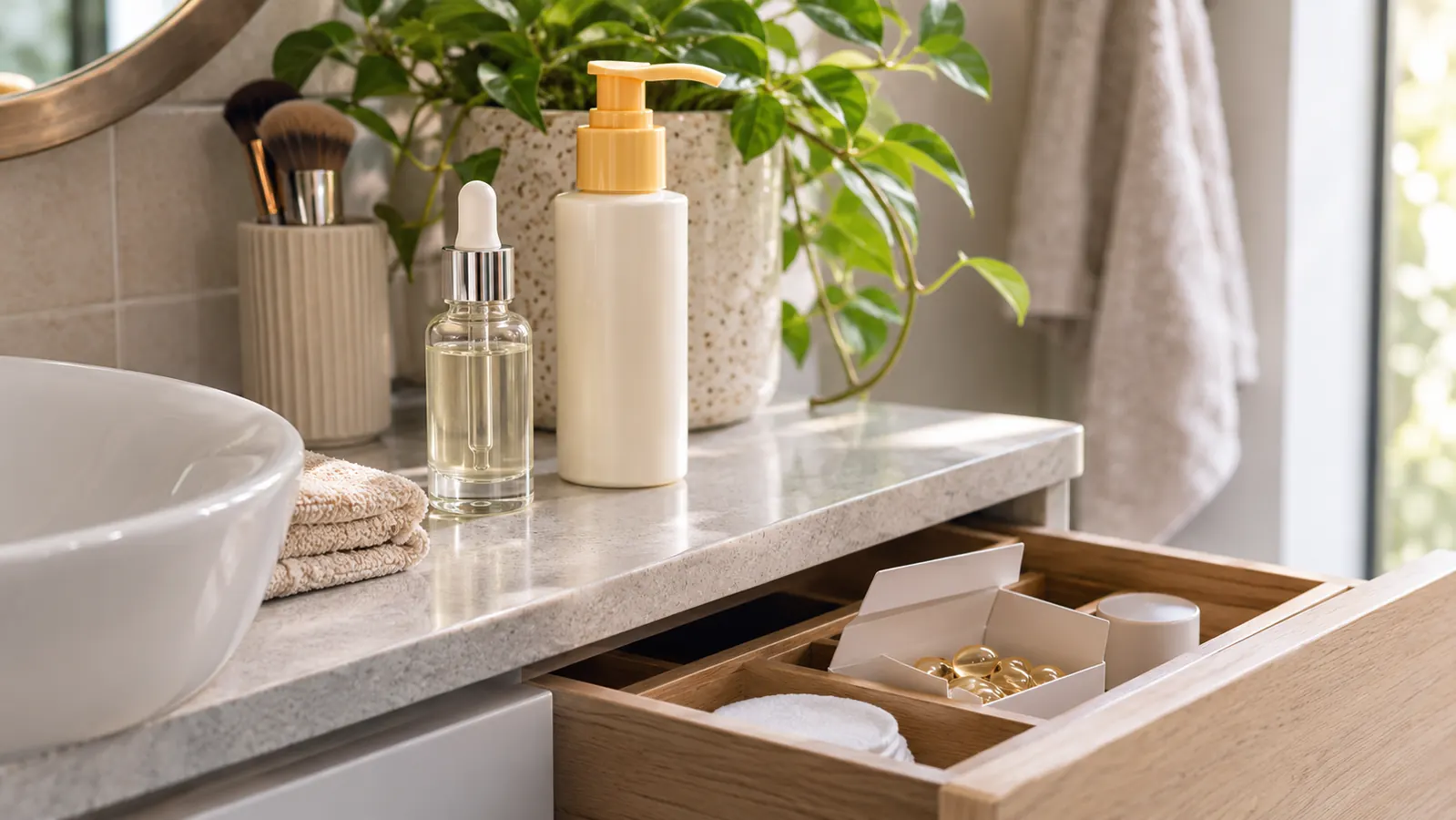
I used the pricier serum for about three months before I switched. I have now used TruSkin for eleven months, three or four drops every morning, and I am on my fifth or sixth bottle. It lives in the medicine cabinet, out of the light, because vitamin C formulas degrade with heat and air, and I finish a bottle in roughly two months. Anything that turns noticeably darker than it was when I opened it gets tossed, which has happened once in a Florida summer.
I judged both on four things: how they felt going on, whether they stung, how they sat under sunscreen, and whether the sunspots on my cheekbones changed. That last one is the slowest and the least dramatic. On me, TruSkin made a visible difference to the spots somewhere around month four, and it has been a gradual softening since. Faded some. Not gone. I want that written down before anything else in this piece is read as a promise.
What Is Actually in the TruSkin Serum
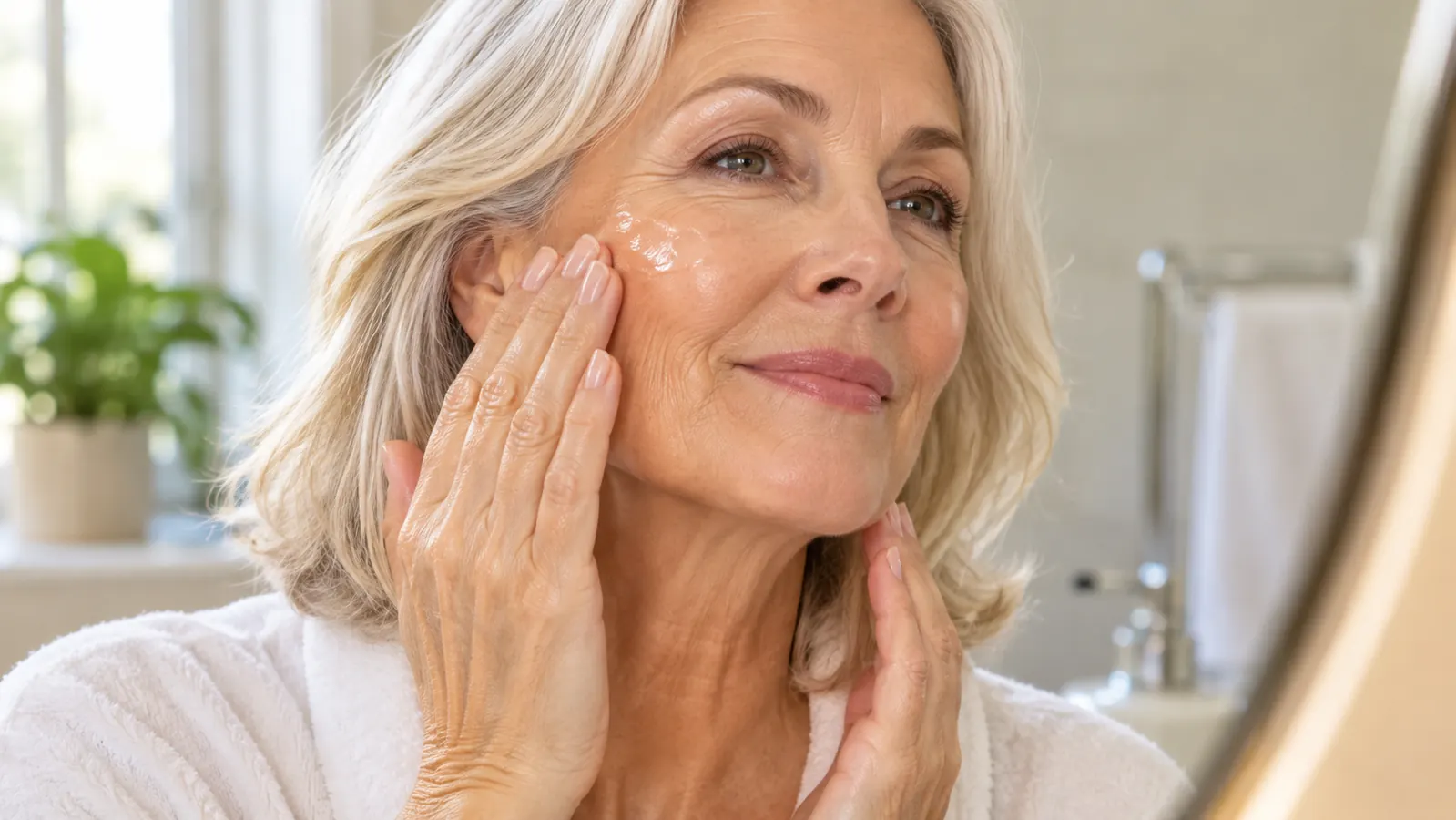
The listing names a stable, gentle form of vitamin C called sodium ascorbyl phosphate, usually shortened to SAP, along with hyaluronic acid, vitamin E and aloe vera. It is unscented, it is listed as suitable for all skin types, it is cruelty free, and the bottle is one fluid ounce, which is the same volume as the pricier serum. It is described as lightweight and designed to dry down completely, with a suggested two to three pumps. I use three or four drops from the dropper instead, which is roughly the same thing and easier to control.
SAP matters more than it sounds. The pricier serum uses L-ascorbic acid at 15 percent with vitamin E and ferulic acid, and that is the form with the deepest pile of published research behind it. It is also the form most likely to sting, especially on skin that is already red or a little raw. SAP has to convert in the skin, which makes it gentler and more stable in the bottle, and it also means the evidence base around it is thinner. I am not a dermatologist and I am not playing one here. I am telling you what the labels say and what my cheeks did.
That trade is the entire comparison in one line. The pricier bottle carries the better-studied molecule. The TruSkin bottle carries the easier one to live with. For a sixty-one-year-old with redness across the cheeks and a short window in the morning before the sunscreen goes on, easy to live with turned out to matter more than I expected it to.
Texture is where the two really part company. TruSkin has a little more body because of the hyaluronic acid and the aloe, so for the first minute it feels like something on your face. Then it is gone and the sunscreen goes over it without pilling. Three or four drops covers my face and my neck, and the neck matters, because that is where the crepey texture has settled in for me. I have used it under makeup on the handful of occasions I wear any, and it has not rolled or gathered in the fine lines around my eyes.
Where TruSkin Wins
Nobody warns you that a brightening serum can make a red face redder. The pricier one did that to me in the first weeks, a warmth along the cheekbones that faded after ten minutes but left me wary every morning. TruSkin has never stung. Not once in eleven months, including the weeks when my skin was dry from the seasonal change and flaking a little around the nose. That reliability is the reason I stopped rotating products. A step you do not dread is a step you keep doing, and consistency is doing most of the work in any routine, no matter what the bottle claims.
Then there is the practical side. The TruSkin bottle costs considerably less, and both are one fluid ounce, so the difference is not a trick of a smaller size. That matters when you use it every single morning and go through a bottle in two months. Unscented is a small mercy too, since fragrance is one of the things my cheeks complain about. It also sits politely with everything else I use, including the neck cream I apply morning and night and the retinol capsules I use after dark. Nothing in my routine has had to move aside for it.
Where the Pricier Serum Wins
I will not pretend the expensive one is just marketing with a nice box. The C E Ferulic formula, 15 percent L-ascorbic acid with vitamin E and ferulic acid, is the formula a great deal of vitamin C research in dermatology was built on. If you want the molecule with the most evidence behind it and your skin can tolerate it, that is the one to look at. The ferulic acid is there to help stabilize the whole arrangement, and it is a well-constructed formula. It is not a bottle of hope with a serif font.
It also absorbs faster than anything else I have put on my face. Where TruSkin leaves a brief wet minute, the pricier serum is essentially gone on contact. If you do your routine in a hurry, or you cannot stand the feeling of product sitting on your skin, that is a genuine advantage and I understand why people pay for it. The smell is the other side of that coin. It has a distinctly warm, slightly savory scent from the ferulic acid that fades in about a minute and that I never got used to. TruSkin has no scent at all, and I noticed the difference every single morning.
My sunspots on the cheekbones softened around month four. They faded some. They did not disappear, and no serum I have tried has made them disappear.
The One I Have Actually Finished Five Times
Eleven months of mornings, three or four drops before sunscreen, unscented, and it has never once stung my cheeks. Bottle kept in the cabinet, out of the light, and replaced every two months or so.
Amazon Check Today's Price on Amazon →What Neither Serum Will Do
Neither one will remove a sunspot. Neither one will lift a jawline or fill a line, and if a bottle tells you it will, put it down. What a vitamin C serum does, at best, is help with the look of dullness and uneven tone over months, and protect your skin a little against the daily insult of the sun while your sunscreen does the heavy work. The sunscreen is the actual anti-aging product in my bathroom. CeraVe AM SPF 30 is the last step every morning, reapplied midday on beach or garden days, and it has been in place longer than any serum I own.
I also want to be honest about the rest of my routine, because it would be easy to hand one bottle all the credit. I use RoC retinol capsules at night. I use Gold Bond neck and chest cream morning and night, and the crepey texture on my neck looked a bit less crinkled at around ten weeks, which I would describe as softer and better hydrated rather than lifted. I stir collagen powder into my coffee, and I cannot separate what that does from everything else. Skin varies from person to person, and it varied on me from month to month. If something on your skin worries you, a dermatologist is the right call, not a review from a retired flight attendant.
Who Should Buy Which
Choose TruSkin if your skin flushes easily, if you have the kind of redness or dryness that makes strong actives a gamble, if you want an unscented step you will repeat every morning without thinking about it, and if you would rather not spend heavily on something you go through every two months. That is my situation exactly, and after eleven months I am not switching back. Choose the pricier serum if your skin is tolerant, you have no history of stinging from vitamin C, you want the most researched form of it, and the faster absorption is worth more to you than the cost.
If you cannot tell which camp you are in, start with the gentler one for two or three months and see how your cheeks behave. You can always move up to the stronger formula later. Moving down after a sting is the more annoying lesson, and it usually costs you six weeks of not wanting to touch your own face. Whatever you pick, give it four months before you judge it, wear sunscreen every day, and expect a softening rather than a vanishing. That is the realistic version of this, and it is still worth doing.
Start Gentle and Give It Four Months
A stable, unscented vitamin C serum with hyaluronic acid and aloe, one fluid ounce, three or four drops each morning before your SPF. The one that stayed in my routine when the fancier bottle did not.
Amazon See Today's Price on Amazon →