

I have lived in Fort Lauderdale for nine years and July still gets me. You step out the door at eight in the morning and the air is already thick enough to swim through. By the time you reach the car, the back of your neck is damp, and whatever you put on your face forty minutes earlier has drifted somewhere it was not invited.
For most of my life I treated sunscreen as a chore I was quietly failing. I would buy the heavy tube, use it for four days, then leave it in a beach bag until it separated. What finally changed was not discipline. It was finding a formula light enough that I stopped dreading it, and then building a routine around the way a Florida summer actually behaves. CeraVe AM Facial Moisturizer SPF 30 has been the last step of my morning routine for a little over two years, which is longer than I have stuck with any single skincare product in my adult life. What follows is the routine I actually use, not the one I wish I used.
I am not a dermatologist and I am not an esthetician. I am a sixty-one-year-old retired flight attendant with fair, combination-dry skin, redness across the cheeks, sunspots on the cheekbones from twenty-six years of cabin air and layovers in sunny places, and fine lines I have earned. What I can tell you is what I do with my own face, in my own bathroom, in a climate that is actively working against me. Take the parts that fit and leave the rest.
The Step I Have Not Skipped in Two Years
CeraVe AM Facial Moisturizer SPF 30 is a broad spectrum SPF 30 day lotion with niacinamide, hyaluronic acid and three essential ceramides. It is oil free and unscented, and it goes on as the last step of a morning routine. If you want to see the current price and the listing details before you commit to a bottle, this is the link I use.
Amazon Check Today's Price on Amazon →Step 1: Make It the Last Thing You Put On, Not the First
Order matters more than people expect. My mornings go cleanser, then three or four drops of vitamin C serum, then a couple of minutes to let that settle, then the CeraVe. If I put the moisturizer on top of a wet face, it goes on streaky and I end up rubbing at it, which is exactly what you do not want to be doing with a sunscreen.
If you are layering a serum underneath, as I do, give it a full minute. I used to rush this and end up with little rolled pills of product along my jaw, which is not a formula problem, it is an impatience problem. The CeraVe goes on once the serum has gone tacky, not while it is still wet.
The other half of this step is timing. I put it on at the vanity before I go anywhere, not in the parking lot at the beach. That sounds obvious written down. It took me years to actually do it. Sunscreen applied in the car does not protect the drive to the car.
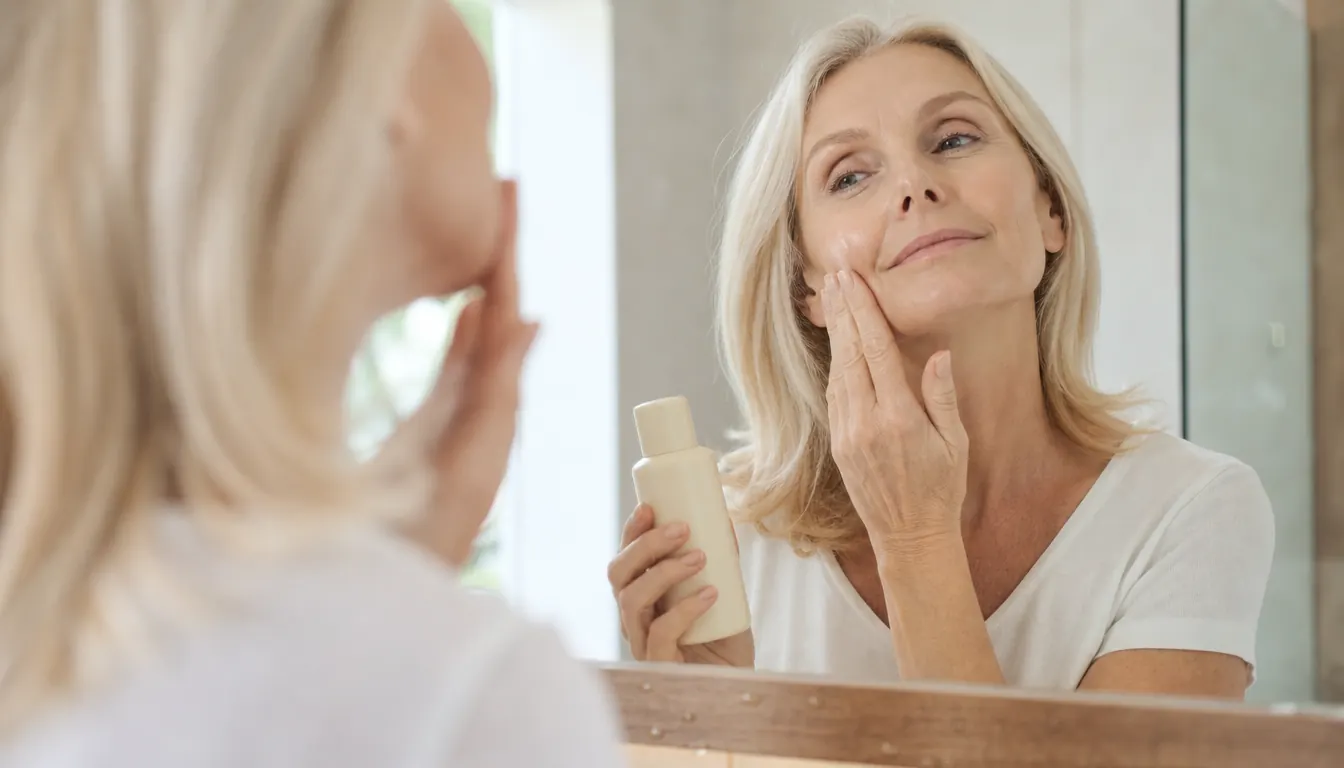
Step 2: Use More Than Feels Reasonable
The most common mistake I see, and made for decades, is using about a third of the amount you need. You want a visible layer. For a face and neck, that is roughly the length of two fingers of product, or a little more than a nickel-sized pool in your palm. If you are using so little that it disappears the second you rub, you are not getting the SPF number printed on the label. That number assumes a thickness nobody applies by accident.
The number to keep in your head is the one on the bottle: SPF 30. That figure is tested at a specific thickness. I would rather use a generous amount of a 30 than a thin film of a 50, and I have tried both. The thin film of the higher number felt virtuous and did nothing at all.
This is where a light lotion earns its keep. A heavy cream at that quantity feels like a mask, so you use less of it without noticing. CeraVe AM is thin enough that I can put on the full amount and still be comfortable. It is oil free and unscented, which matters to me because my cheeks flush easily and a fragranced product leaves them red for an hour.
It also means the bottle goes faster than you expect. A 3 ounce bottle lasts me about six weeks at this rate, and I would rather replace it more often than apply a token smear. I keep a second one in the bag by the front door so I am never deciding whether it is worth going back upstairs.
Step 3: Give the White Cast Three Minutes Before You Judge It
CeraVe AM uses micro-fine zinc oxide, and zinc oxide has a look. On my fair skin there is a faint pale cast for the first few minutes. I have learned to put it on, walk away, and finish my coffee. By the time I come back it has settled into something invisible. If I stand at the magnifying mirror and stare at it, I will convince myself it is a problem. It is not, unless I have somewhere to be in four minutes.
The honest caveat: on deeper skin tones that cast can be more noticeable and can take longer to fade. I am not the person to tell you how it will look on your face, and I would not trust anyone who claims a zinc formula is invisible on every face. If you have a deeper skin tone, try it on a Saturday morning before you decide, not on the day of something.
Where the cast actually helps me is at the beach. I can see where I have covered and where I have missed. The bridge of my nose and the tops of my cheekbones, where my sunspots sit, always need a second pass. Being able to see the gaps is worth three minutes of looking slightly pale in the kitchen.
I also use it on my ears and the backs of my hands, which is where a lifetime of sun shows up first on women my age. Nobody warns you about the hands. Mine have sunspots that arrived in my fifties and have been quietly multiplying since. If I have product left on my fingers after my face and neck, it goes on the backs of my hands.
Two years, two bottles at a time, one at the vanity and one by the front door. That is the entire system, and I am mildly annoyed at how well it works.
Step 4: Reapply at Midday, and Respect the Label
Here is the line on the listing that matters most in a Florida summer: not water resistant. That is not a flaw in the product, it is a fact about what it is. CeraVe AM is a daily moisturizer with sun protection built in, made for a morning routine. It is not a beach sunscreen, and it will not survive twenty minutes in the surf.
So I use it as the foundation and I treat the rest of the day as its own job. On garden days I reapply at midday, out of the sun, with the second bottle. On beach days I wear it for the drive and the walk down, then switch to a water-resistant sport sunscreen for the water itself. That is not a knock on CeraVe. I would not expect a daily lotion to do a job it was never built for.
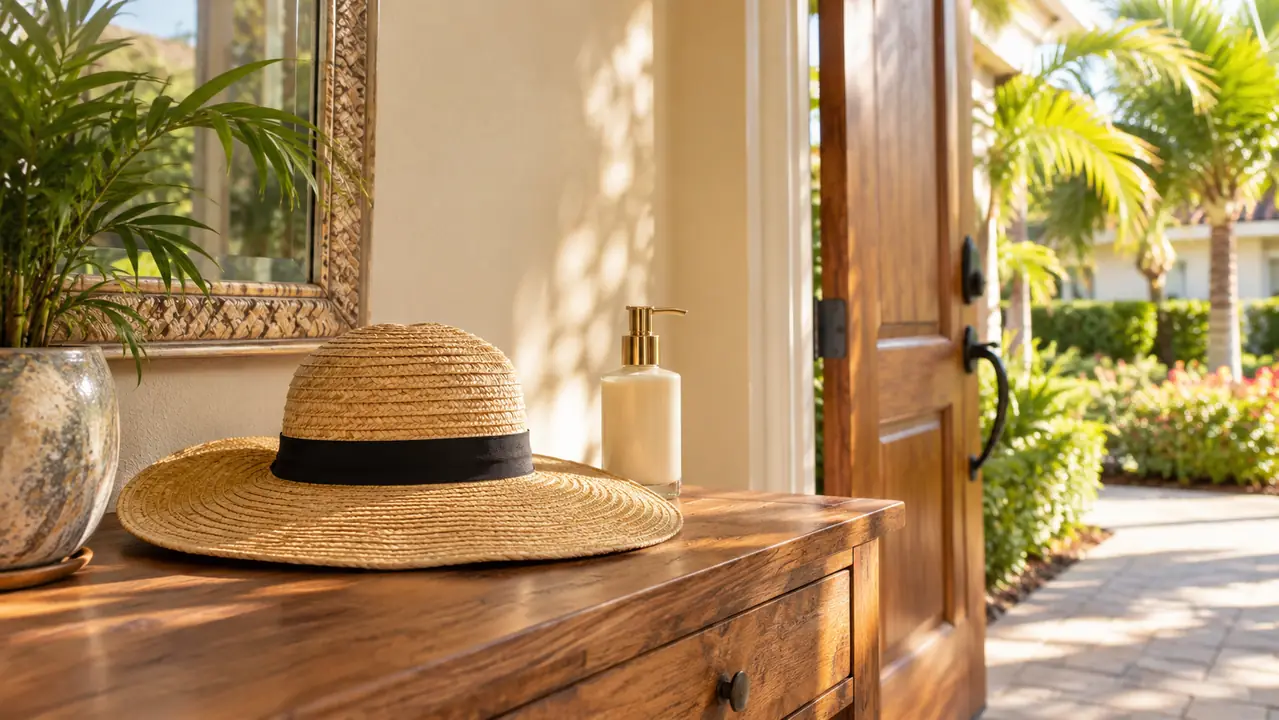
For a normal day, the one that ends at the grocery store and the post office, I do not reapply. I am indoors for most of it. What I do instead is wear a wide-brimmed hat for the walk from the car, and I park in the shade when there is shade to be had. That is less about the product and more about accepting that I live somewhere with a hostile sun.
There is a version of this routine that is more elaborate than mine. Some people double up with a dedicated sunscreen over a moisturizer. I tried that for a season and it lasted about three weeks before I started skipping both. If a routine needs more steps than you will realistically do at seven in the morning, it is not a routine, it is a wish. One product that goes on and gets out of the way beats two that you avoid.
Step 5: Take It Off Properly at Night
Because it is not water resistant, it also comes off without a fight. My evening cleanse takes it off along with everything else, and I have never needed a separate makeup-removing step for it. That is one of the reasons I have stayed with it. The products I quit were the ones that demanded extra work at eleven at night.
The order at night matters to me more than it did when I was younger, because the retinol does the heavy lifting and the sunscreen protects that work during the day. I keep the capsules in the vanity drawer, away from the window, and I take the neck cream upward onto the chest. It is a five minute routine. Five minutes, every night, for eight months, is what it took before I noticed anything around my eyes.
Without the morning step, the retinol and the vitamin C would be doing repair work that the sun undoes by nine in the morning. That is the whole argument for daily SPF, and it took me into my fifties to believe it.
What Else Helps
A hat. I mean a real one, with a brim that shades the tops of the cheekbones, not a visor. I keep one by the door next to the sunscreen bottle, because the one in the car is always the one I forget. The sunspots on my cheekbones faded somewhat with the vitamin C serum over about four months, and I am convinced the hat did as much as the serum did.
Sunglasses, both for the fine lines around the eyes and because otherwise I squint, and squinting is a habit that leaves a mark. Shade, wherever it is available. And a dermatologist. I had a routine skin check two years ago, nothing was found, and it was that appointment that got me wearing daily SPF in the first place. If anything on your skin is new, changing or bleeding, that is a doctor's call and not a blog's.
One more, and I say this carefully. I have taken collagen peptides in my coffee for about seven months. Around month four I thought my nails felt stronger and my skin felt less dry. I cannot separate that from the sunscreen, the retinol, the vitamin C, the water I drink, or the fact that I stopped flying for a living. Anyone who tells you which one did it is guessing. Skin varies person to person, and it varies in the same person across a decade.
I will say the unglamorous thing. None of this is dramatic. I am not going to tell you a bottle changed my life, and I would be suspicious of anyone who did. What I can tell you is that after two years of daily SPF, my skin looks calmer than it did, my sunspots are softer than they were, and I stopped finding new ones to worry about. That is a modest result and I will take it.
The Bottle I Keep Buying, Two at a Time
If you want a morning moisturizer with broad spectrum SPF 30 that you will still reach for on an ordinary Tuesday, this is the one that survived two Florida summers on my vanity. Oil free, unscented, with niacinamide, hyaluronic acid and three ceramides. Check the current price and the listing details before you order.
Amazon Check Today's Price on Amazon →